Every AI dollar, on one ledger.
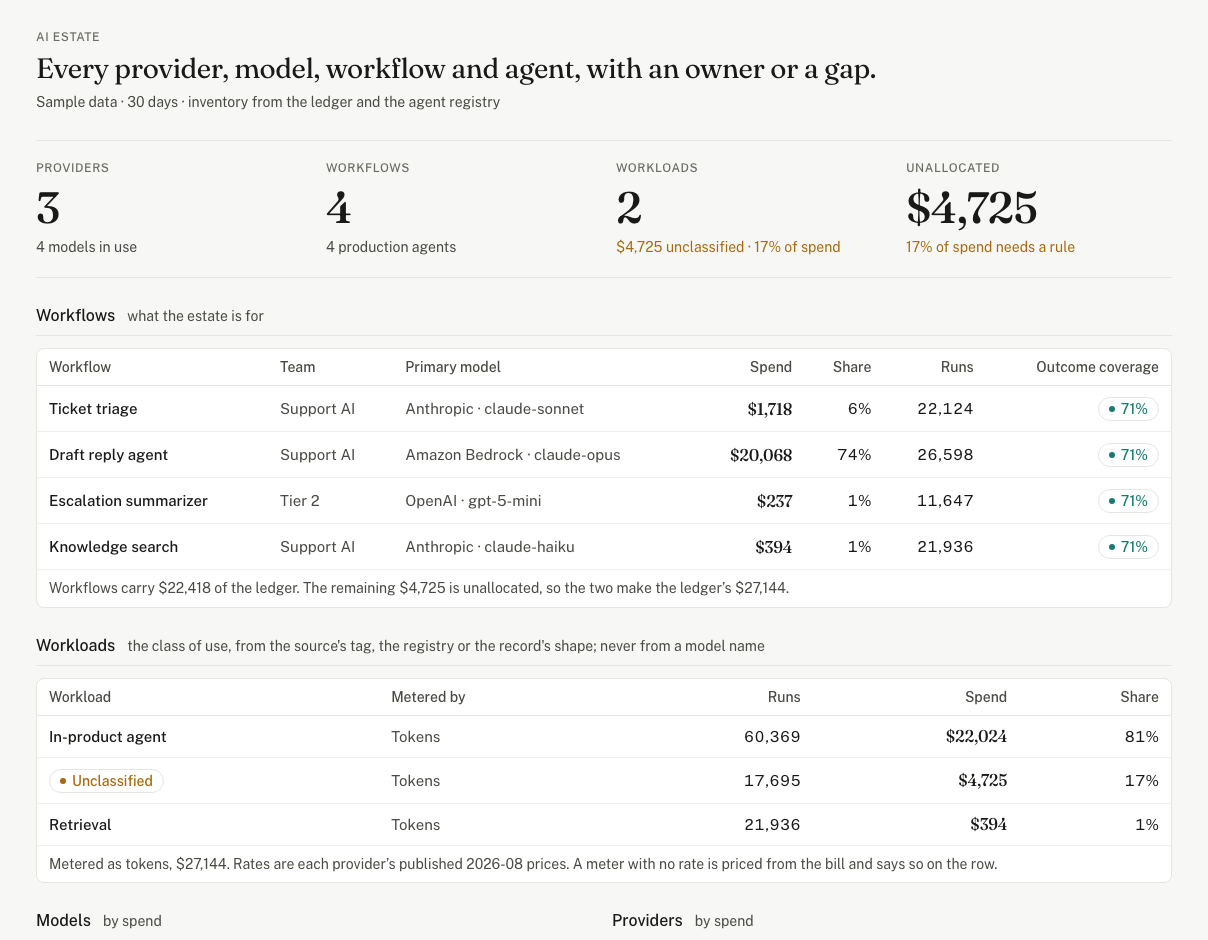
Providers, agents, seats, cloud and invoices, reconciled to the bill. What is running, what it costs, where the gaps are.
Why Discover
No single bill shows the whole cost.
Model calls, agent tooling, storage, compute and seats land on different invoices. Discover puts them on one ledger.
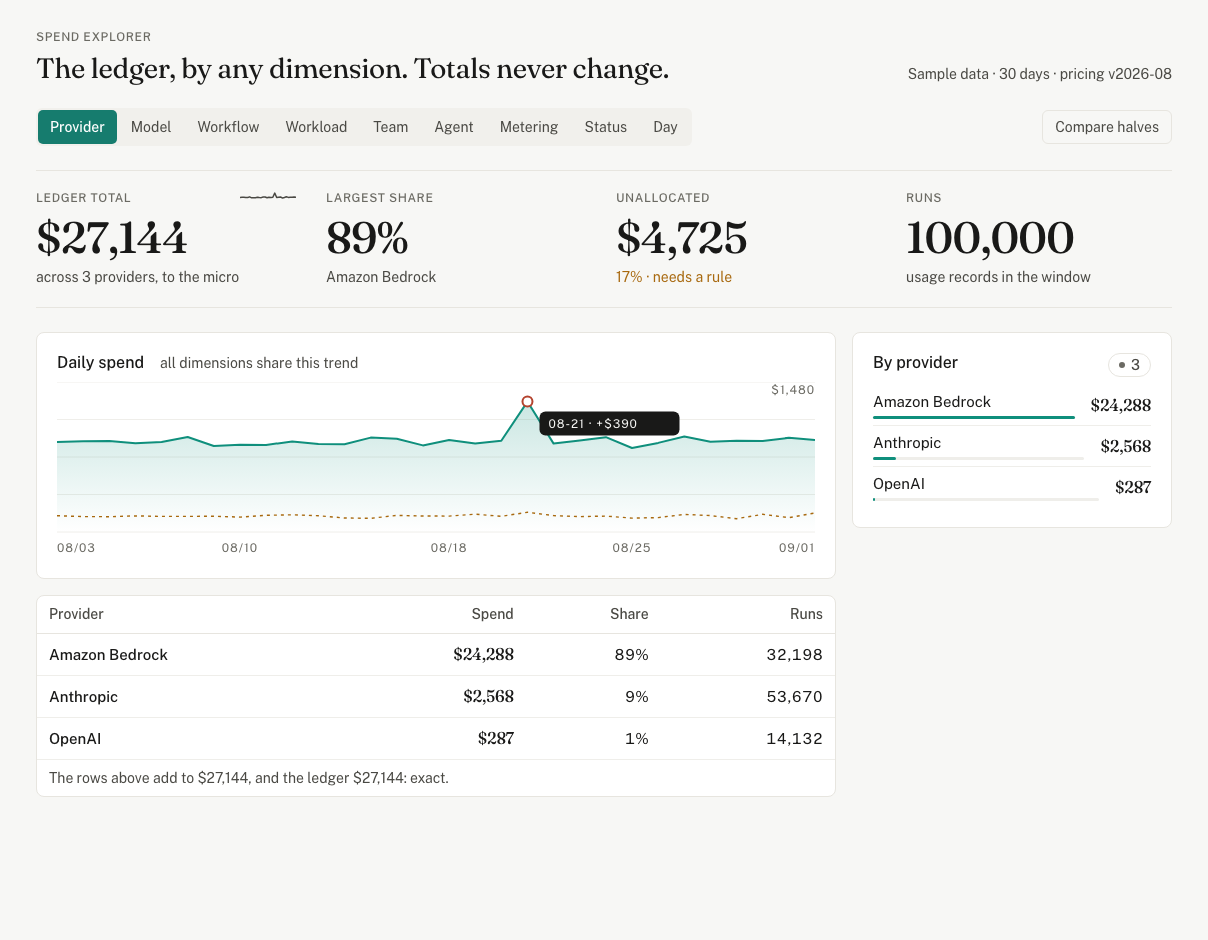
- AWS Bedrock$24,288
- Anthropic API$2,568
- OpenAI$287


One ledger
$27,144
Reconciled to three provider bills, within a dollar.
3 provider bills
One estate
Every provider, model, agent and workload, each with an owner or a named gap.
±$1 of the bill
One total
Meters normalized, then reconciled to each vendor's invoice before anyone slices it.
17% unallocated
Honest gaps
What a source cannot answer stays a gap. Never filled with an estimate.
Coverage
A complete view shows its gaps.
Known, unallocated and unavailable stay three distinct numbers, so nobody mistakes a blind spot for a zero.
Ledger · 30 days · sample org
$27,144 reconciled to 3 provider bills
- 83%
Owned and reconciled.
Attributed to a source, a meter and an owner, and tied to the provider total for the billing period.
- 17%
Read, but not yet owned.
Carried as its own number, with the evidence needed to allocate it. One published rule lifts it.
- —
The source cannot answer.
Some sources report no meter at all, such as a per-seat tool with no usage export. The ledger names that gap and never fills it with an estimate. The sample has none.
How Discover works
Three screens, one total.
From the first read-only source to a number finance can sign, without the total ever moving.
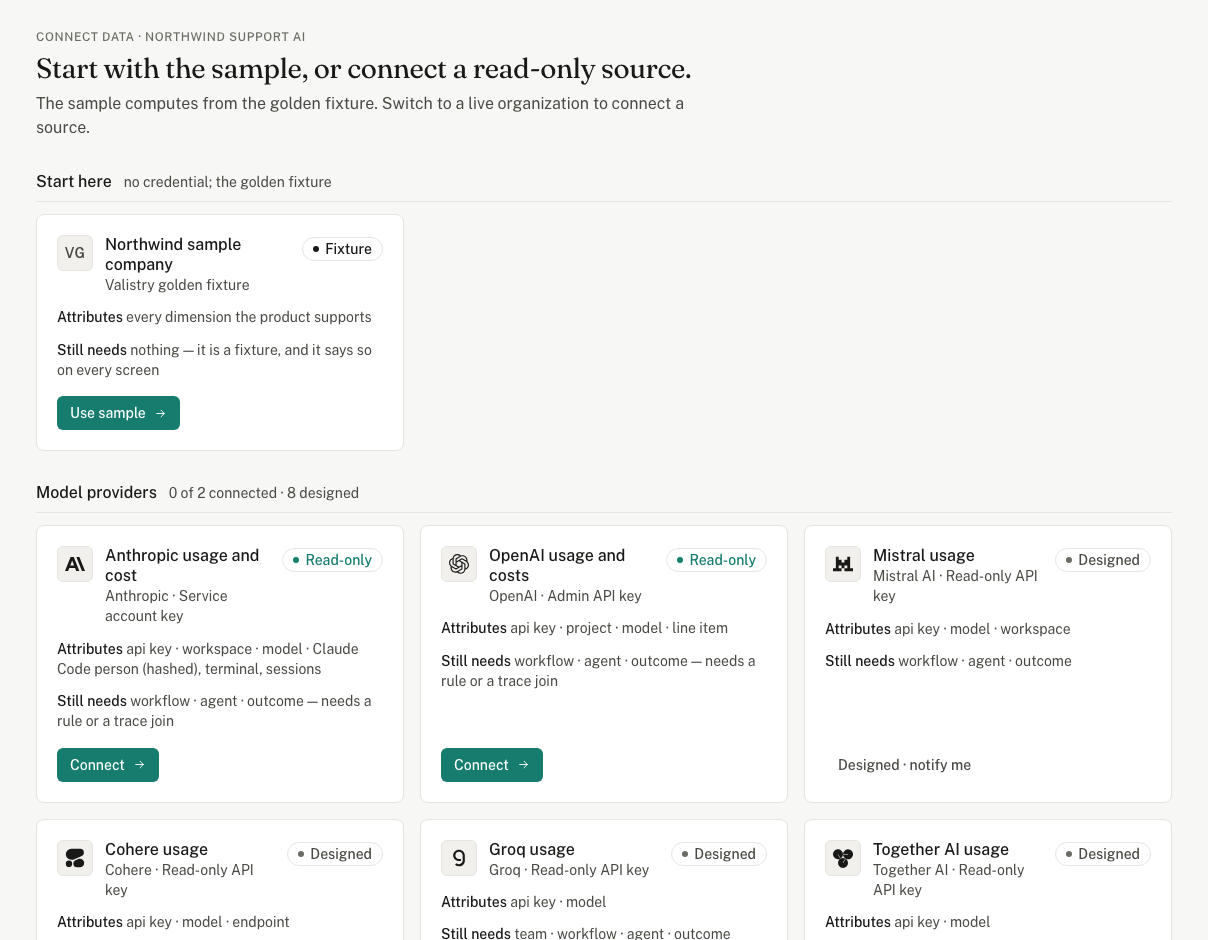
Start with a number everyone trusts.
A 30-minute demo on your own estate, or connect one read-only source and see the baseline yourself.
Once the total is reconciled, the next question is who owns each dollar and what it was for.
02Next: Attribute →