
Worldwide AI spending will more than double by 2030, according to Gartner's forecast of July 2026. In most companies, the same question now comes up at every budget review: what did we get for it?
Few teams can answer it, and usually not because the money was badly spent. Accountability for AI tends to stop too early, at the cost.
What I hear from buyers
My personal observations from selling AI into enterprises over the last few years:
- Excitement, then a sudden cut. A rollout is approved, the first large bill arrives, and the week after, usage is cut back. Nobody wanted it to go that way, but nobody had the number that would have stopped it.
- Spend nobody owns. Usage that no team claims, or that serves work the business never asked for. It is rarely abuse. More often, nobody was ever named as its owner.
- A start that never happens. Several tools, APIs and projects, some of them never approved, and no one can see the total. In that position, waiting looks like the safe choice.
Why the sudden cut happens
The person who reads the bill sees what AI cost, but not what it produced. With only the cost in front of them, the safe decision is to spend less. Cutting is the one move a cost-only view allows.
And the cut is often the wrong one, because it removes the AI that works along with the AI that does not. Nobody can tell them apart. The size of the bill is usually not the issue; what is missing is a way to show what the bill bought.
Why nobody can show it
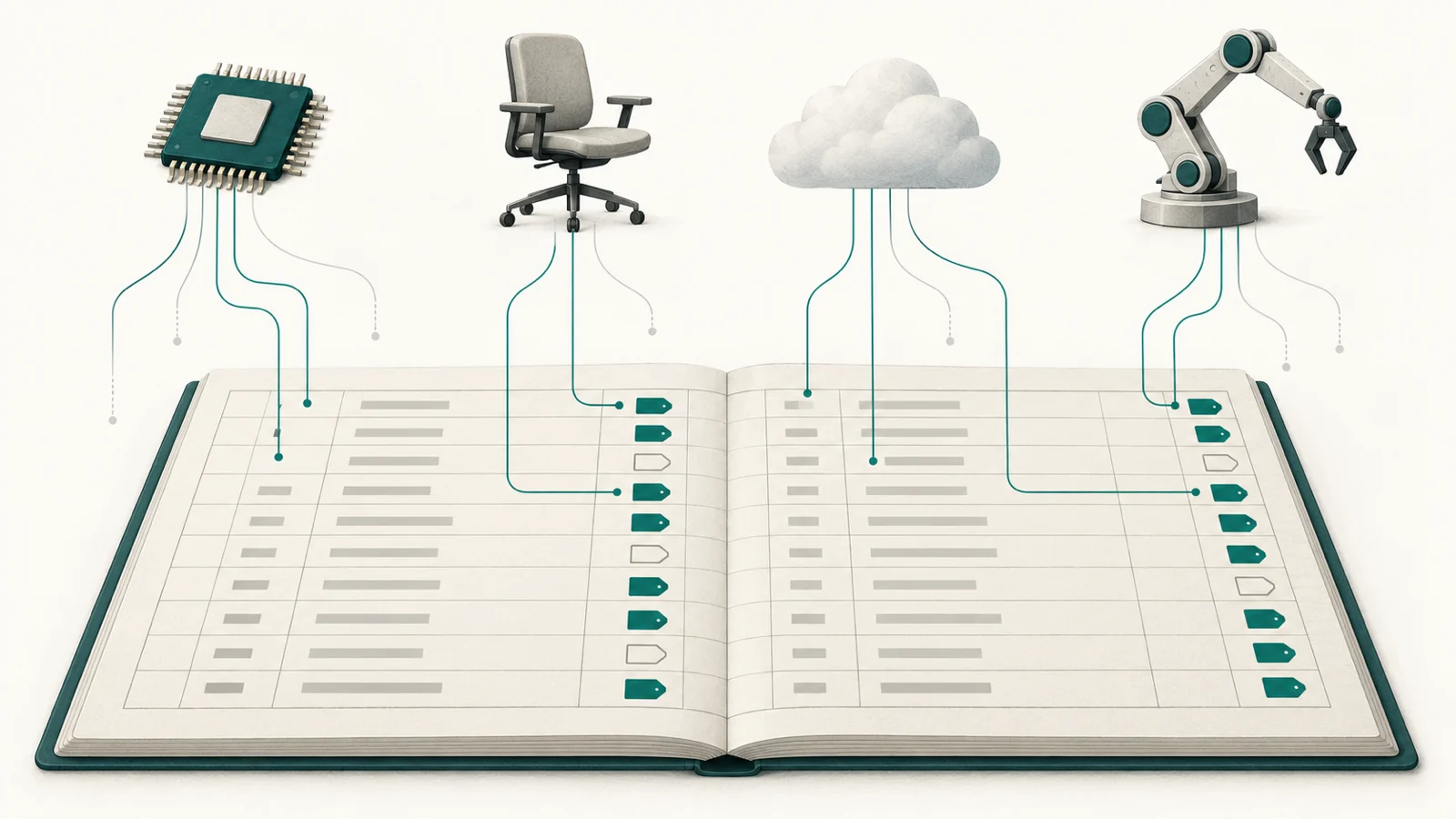
A cloud bill comes mostly from one provider, but AI spend does not. One company can pay for AI in five places at once: model providers, coding seats, agents inside other software, AI gateways, and the AI services of its cloud.
Each team that looks at this spend sees only its part:




- Providers
- Finance
- Technology
No single view holds the owner or the outcome.
Each of these views is correct for its own part, which is why the gap is easy to miss. Every team can answer its own question, and nobody is asked the question that sits between them.
Recent surveys point to the same gap.
79% of finance leaders had AI cost overruns in the past year.
That figure comes from a survey of 500 finance leaders in the US and UK (DoiT and Sapio Research, February 2026). In the same survey, accountability for AI spend was split between technology (55%) and finance (53%), with no clear single owner. And in an IBM Institute for Business Value study of 2,000 senior technology executives (January to April 2026), two-thirds of CIOs and CTOs said they are held accountable for AI systems they do not fully control.
Three levels of accountability
Accountability for AI comes in three levels, and each one answers a different question.
- 1What did we spend?
- 2Who answers for each dollar?
- 3What did it produce, against what we expected?
The levels build on each other. You cannot own spend you cannot see, and you cannot judge the value of spend that has no owner, because nobody can say what it was for.
They also change what a budget review can decide. With only the first level, the choice is to spend more or less. With the second, you can ask a team to explain its spend. With the third, you can keep what works, change what costs too much for what it delivers, and stop what delivers nothing. This is where a budget review starts to end in decisions instead of sudden cuts.
We have seen this once before
I spent eleven years at AWS while companies moved to the cloud. Most of them adopted first and learned the economics later, so cost became the first question after adoption, and it stayed the main question for ten years.
AI is following the same path, only faster, and with one difference. A cloud server's value was rarely in question, because it ran the application. With AI, the value of each workload is exactly what people are asking about. So accountability for AI cannot stop at cost, the way it often did for cloud.
How to reach the third level
You do not need a new process to start, but each level has to rest on the one below it.
- For spend, read each vendor's usage and billing data, and check the total against the invoice. Finance will not trust a total that does not match the bill.
- For owners, use the handle each vendor already gives you: a workspace, a project, an inference profile, a seat. Give each team its own, and new spend arrives with its owner already attached.
- For value, pick the outcome the business already counts, in the system that already records it: the help desk, the code host, the CRM. Then write down, before the spend, what you expect one outcome to cost.
That last step is the one teams most often skip, and it matters most, because without an expected cost almost any result can look acceptable afterward.
Four questions for your next budget review
- What did we spend on AI last month, across every vendor, and does it match the invoices?
- What share of that spend has an owner?
- For the largest workloads, what outcome do they produce, and what does one outcome cost?
- Is that cost above or below what we expected when we approved the spend?
If you can answer all four, your budget reviews can end in decisions rather than cuts. If the third and fourth are hard to answer today, that is where to start.
The cost of AI is easy to see. Its value has to be shown workload by workload, and someone has to be responsible for showing it. To me, that is what accountability for AI means.
See where your company stands today.
Take the AI efficiency check